2026-10-22 · Tom Brennan
What Affects Water Line Repair Costs In Princeton NJ
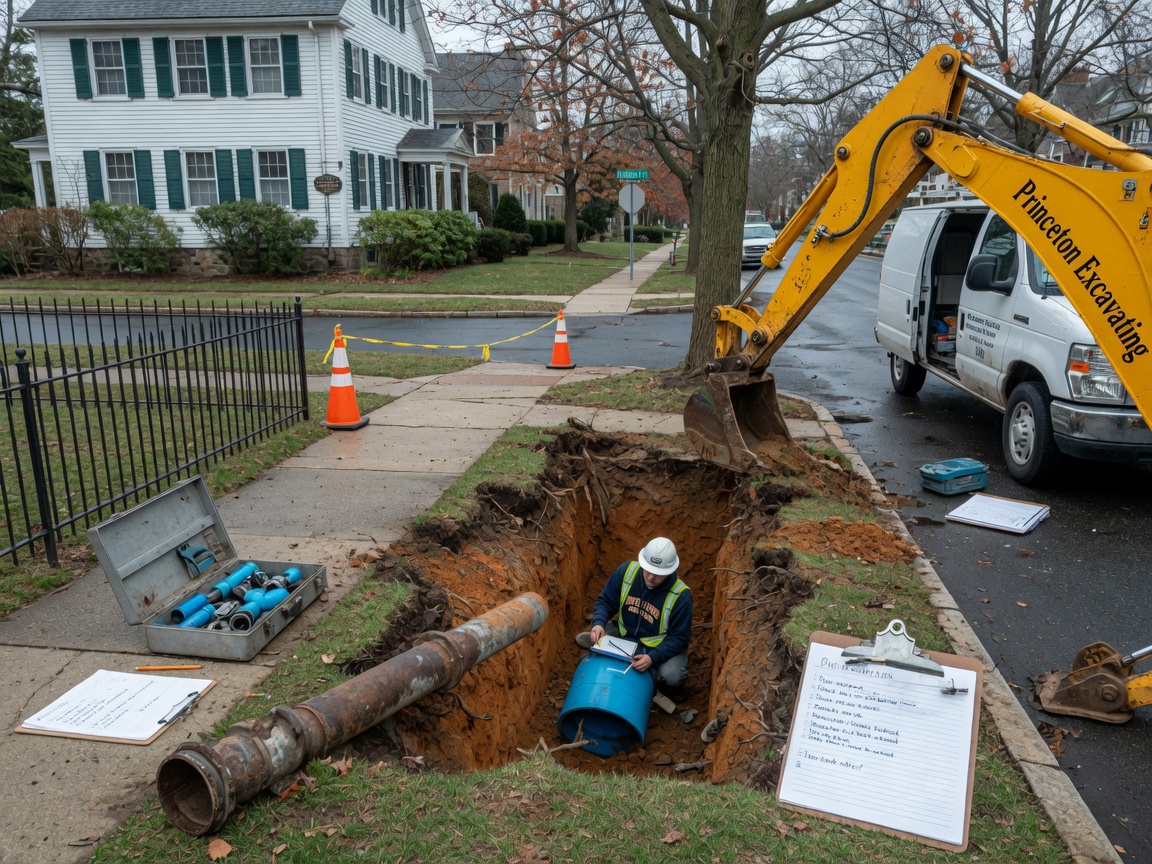
Water line repair costs in Princeton NJ typically range from $750–$2,800 depending on pipe depth, material, and whether the work hits frozen ground or older galvanized lines common in neighborhoods near Princeton University. Princeton's housing stock mixes pre-war homes in Witherspoon-Jackson with mid-century builds in Princeton North, and these differences directly change excavation needs and pipe access. Cold winters in the humid continental climate push many repairs into frozen soil, raising labor time. Homeowners in Princeton Junction or near Carnegie Lake often face added variables from tree roots and varying water table levels.
Home Age and Pipe Material in Princeton Neighborhoods
Older homes in Witherspoon-Jackson and around the Institute for Advanced Study frequently contain galvanized or cast-iron lines installed before 1960. These materials corrode from the inside and require longer trench sections during water line repair because joints fail in multiple spots. Newer copper or PVC runs in Princeton North still need full replacement once leaks develop near the meter. Depth of cover averages 3–4 feet in Mercer County yards, but older foundations often sit closer to grade, forcing hand digging to avoid damaging footings. Each added foot of excavation adds measurable time when crews work around mature landscaping common on streets near Princeton Battlefield State Park.
Seasonal Effects from Princeton Winters
Once winter temperatures drop, the ground hardens quickly in open areas near Plainsboro and Lawrenceville, slowing backhoe progress and increasing equipment wear. Frozen lines become brittle, so a small leak can turn into a full break that demands water line leak repair instead of a simple clamp. Crews schedule more underground water line repair calls after January thaws when shifting soil exposes previously hidden cracks. Homeowners who follow guidance in How To Prevent Frozen Water Lines During Princeton Winters reduce emergency call frequency, but untreated lines still drive up average job costs by 30–40 percent during peak cold months.
Soil, Terrain, and Water Table Realities
Mercer County clay soils expand and contract with moisture changes, stressing joints along routes from Trenton into Princeton. Properties near Carnegie Lake sit on higher water tables, so trenches fill with groundwater and require constant pumping during main water line repair. Slight slopes in Princeton Ridge and Ettl Farm direct runoff toward foundations, increasing external corrosion on older service lines. These terrain factors mean crews often extend trenches farther than the visible leak to reach stable pipe sections, directly lengthening the project timeline and equipment use.
Access and Location Variables Across Service Areas
Narrow lots in Princeton Center limit machine access, pushing crews toward Water Line Leak Repair techniques that minimize street cuts. Homes along North Harrison and in Constitution Hill often have long service runs crossing multiple easements, raising permit and restoration expenses. Tree roots from mature oaks near the Princeton University campus wrap around pipes, requiring careful root pruning before any replacement segment can be installed. Each of these site conditions changes the final invoice more than the base hourly rate.
How Leak Detection Influences Total Cost
Early water line leak detection prevents unnecessary excavation in yards bordering the Institute for Advanced Study. Acoustic and camera methods locate the exact failure point, limiting trench length to 6–10 feet in most Princeton cases. Skipping detection on older lines in Riverside or Pretty Brook frequently doubles the excavated area and the final bill. Accurate detection also helps homeowners decide between targeted water line leak repair and full main water line replacement when multiple corrosion sites appear on the same run.