2026-10-22 · Tom Brennan
How To Prevent Frozen Water Lines During Princeton Winters
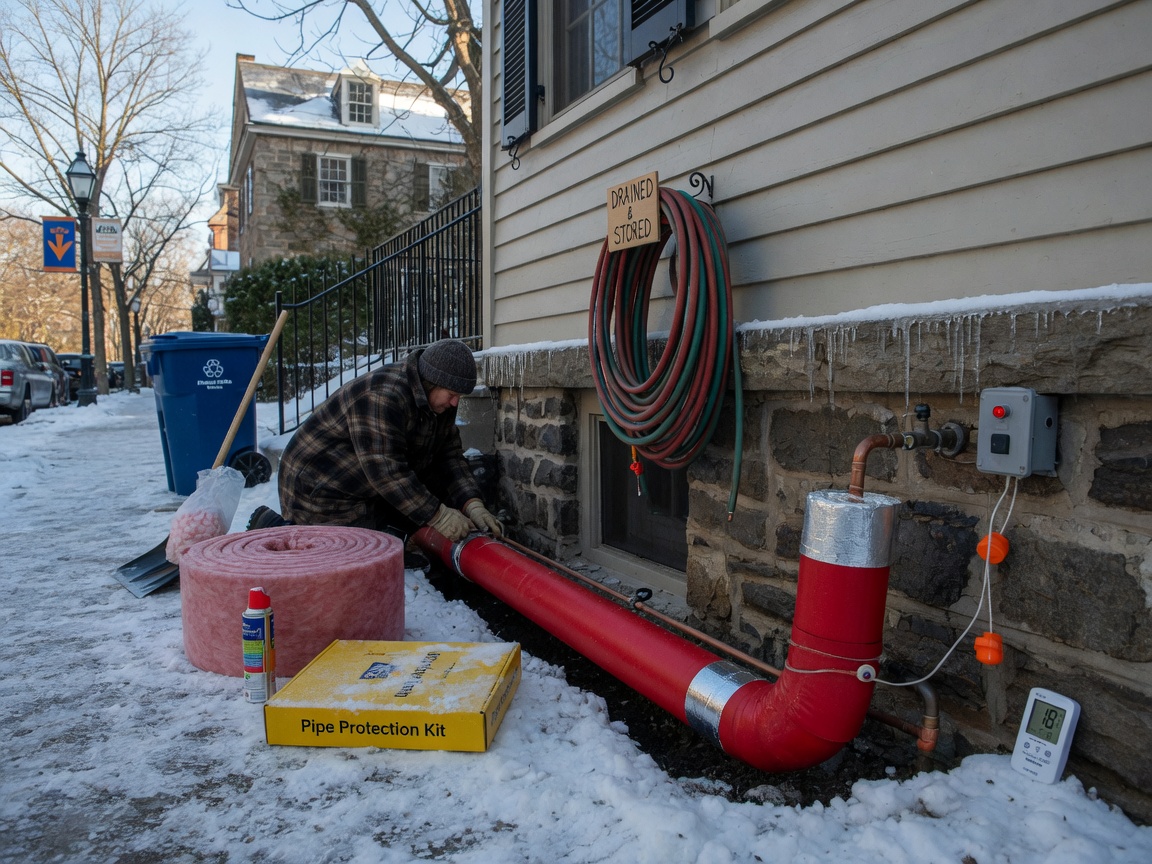
Princeton winters with temperatures often dropping below 20°F in a humid continental climate can freeze water lines in homes built decades ago near Princeton University and the Institute for Advanced Study. Insulate exposed pipes in crawl spaces and basements, allow faucets to drip slowly during overnight lows, and maintain indoor temperatures above 55°F to prevent ice blockages that lead to bursts.
Understanding Local Winter Freeze Risks
Princeton sits in Mercer County where cold air settles into low-lying spots around Carnegie Lake and Princeton Battlefield State Park, making underground lines in Witherspoon-Jackson and Princeton Junction especially vulnerable. Older housing stock from the early 1900s through 1960s features shallower burial depths and galvanized or copper lines that conduct cold faster than modern PEX. Nearby areas like Lawrenceville and Plainsboro share the same freeze-thaw cycles that expand water into ice, cracking joints at the meter or where lines enter foundations. Soil here holds moisture from summer humidity, which then freezes and exerts pressure on pipes running under driveways or lawns. Homeowners who ignore these patterns often face leaks once thaws hit in late January or February.
Insulating Pipes in Princeton Basements and Crawl Spaces
Start by wrapping pipes in unheated areas with foam sleeves at least 1/2-inch thick, focusing on runs near exterior walls in Princeton North homes. Add heat tape rated for 5–8 watts per foot on the coldest sections, plugging it into a GFCI outlet to avoid overloads during extended freezes. In Witherspoon-Jackson properties with stone foundations, seal gaps around entry points with expanding foam to block drafts that drop pipe temperatures below 32°F. Check insulation annually before December, as settling soil around Carnegie Lake can expose lines over time. This approach adds 10–15 years to line life without excavation and keeps water moving even when overnight lows reach single digits.
Allowing Faucets to Drip During Cold Snaps
When forecasts predict sustained temperatures under 25°F, open the farthest cold-water faucet from the main entry a quarter turn so a steady pencil-thin stream flows. This relieves pressure buildup as water expands into ice within lines serving Princeton University-adjacent neighborhoods. Pair the drip with a trickle on the hot side if the water heater sits in a garage or uninsulated utility room common in Plainsboro-style ranches. Monitor the stream for 48 hours during arctic outbreaks, then shut off once daytime highs climb above 35°F. The method uses only a few gallons per day yet prevents the $400–$1,500 repair costs that follow a split line under a slab.
Keeping Consistent Indoor Temperatures
Set thermostats no lower than 55°F even when away, especially in Princeton Ridge and Ettl Farm homes with large window banks that radiate heat outward. Close doors to unused rooms but leave cabinet doors under sinks open so warm air circulates around supply lines. In older Witherspoon-Jackson Victorians, place a small space heater in the basement set to 50°F on a timer during multi-day cold fronts. Avoid shutting off heat entirely during holiday travel, as the temperature swings common between Princeton and Trenton amplify freeze risk in unmonitored properties.
Knowing When Frozen Lines Require Professional Water Line Leak Repair
If water stops flowing after a deep freeze or you hear gurgling at the meter, shut off the main valve immediately and call for assessment rather than attempting to thaw with torches that can damage copper. Signs like reduced pressure or damp spots near foundations often trace back to splits in service lines buried 3–4 feet deep under Mercer County frost lines. For homes in Constitution Hill or Riverside, schedule an inspection before winter arrives to locate weak joints that may fail when ice forms. Signs Of Underground Water Line Leaks In Older Princeton Homes details what to watch for after a thaw. Water Line Leak Repair addresses breaks without full excavation when caught early. What Affects Water Line Repair Costs In Princeton NJ explains variables like depth and access in local soil conditions.